JUST RELEASED: 2026 US State Department TIP (Trafficking in Persons) Report
Report: Scam Compounds, Emerging Trends, and a Landmark Recognition of Orphanage Trafficking

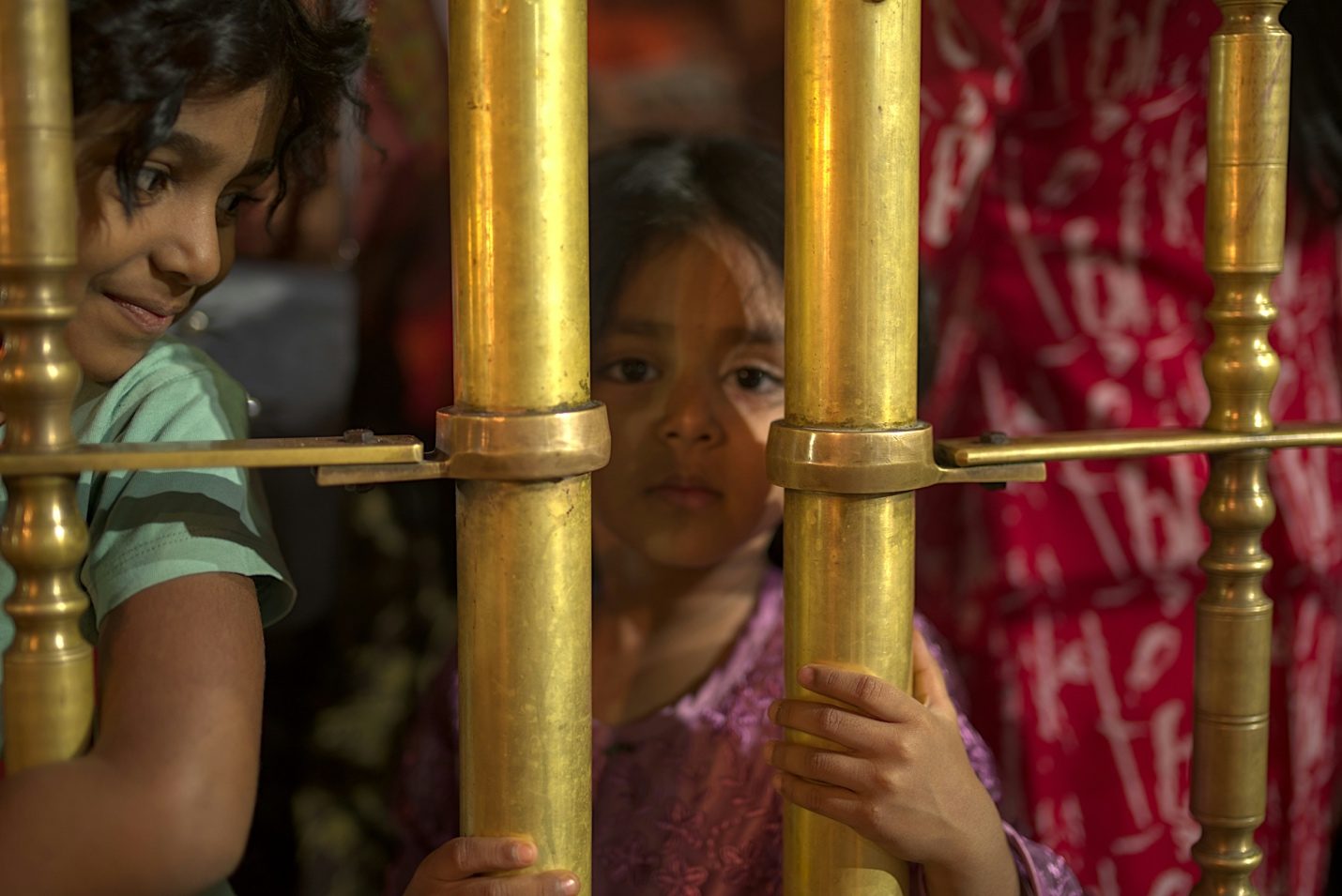
The U.S. Department of State's 2026 Trafficking in Persons (TIP) Report was released this week and devotes a Topic of Special Interest to orphanage trafficking, defines the term, and adds a dedicated entry on institutional care settings. For the Interparliamentary Taskforce on Human Trafficking (ITHT) and our Working Group on Orphanage Trafficking, this is a recognition we have pressed for in parliaments and international forums for years.
Secretary of State Marco Rubio released the 2026 TIP Report on October 8, 2026. It covers government efforts globally from April 1, 2025 to March 31, 2026 and assesses 188 countries and territories. Like last year's edition, it arrived months after the June 30 statutory deadline.
The TIP Report remains the world's most comprehensive assessment of government anti-trafficking efforts. Its findings shape diplomacy, foreign assistance and, often, the legislative agendas of the parliamentarians in our network. Below we summarize the report's headline issues and what its new language on orphanage trafficking means for lawmakers.
Scam compounds: forced criminality at industrial scale
Scam compounds are a central focus of the 2026 report. Transnational criminal organizations, predominantly run by Chinese nationals in Southeast Asia, have now expanded their operations into Africa, the Middle East, Europe and Latin America.
- Recruitment: Hundreds of thousands of people from at least 80 countries were lured by fraudulent job listings.
- Control: Once inside guarded compounds, victims are held through debt bondage, violence and intimidation.
- Forced criminality: Victims are made to run romance scams, fraudulent online gambling and bogus cryptocurrency investment schemes.
- Cost: Americans alone lost at least $18.2 billion to Southeast Asian scam compounds in 2025.
Country narratives show the human toll. The report credits India, for example, with repatriating 6,720 nationals exploited in Southeast Asian scam operations. The lesson for parliamentarians is that scam-compound victims are trafficking victims first, and must be screened and protected rather than prosecuted for crimes they were forced to commit.
Other issues highlighted in the 2026 report
State-sponsored trafficking. Twelve governments are documented as having a "policy or pattern" of state-sponsored trafficking: Afghanistan, Belarus, Burma, Cambodia, China, Cuba, Eritrea, Iran, North Korea, Russia, South Sudan and Sudan. The conduct ranges from state-mandated forced labor in infrastructure and agriculture to sexual slavery in government camps and the recruitment of child soldiers.
Child soldiers. Under the Child Soldiers Prevention Act, 14 countries were listed for security forces or state-backed militias that recruited or used children: Afghanistan, Burma, the Central African Republic, the Democratic Republic of the Congo, Ethiopia, Iran, Nigeria, Russia, Rwanda, Somalia, South Sudan, Sudan, Venezuela and Yemen. Listing triggers restrictions on certain U.S. security assistance unless waived.
Cuba's labor export program. Cuban regime-affiliated personnel deployed abroad fell from roughly 24,000 in early 2025 to between 15,000 and 18,000 in 2026, after four countries ended bilateral agreements with Havana. Healthcare workers make up 75 percent of this workforce, and the government withholds 50 to 95 percent of their wages.
Tier rankings. Twenty countries were placed on Tier 3, including North Korea, which remains there for a 24th consecutive year, alongside China, Iran, Russia, Afghanistan, Cuba and Venezuela.
Global law enforcement data. For calendar year 2025, governments reported:
| Measure | 2025 |
|---|---|
| Prosecutions | 24,254 (5,741 for forced labor) |
| Convictions | 7,576 |
| Victims identified | 156,912 |
UN peacekeeping. UN missions recorded 51 allegations of sexual exploitation and abuse in 2025, down from 102 in 2024 and the lowest annual total since 2007.
Spotlight: orphanage trafficking and institutional care settings
The 2026 report addresses orphanage trafficking in two places: a Topic of Special Interest titled "Trafficking in Persons in Orphanages: When Institutional Care Fuels Exploitation," and a new "Institutional Care Settings" entry in its Understanding Human Trafficking section.
The definition
The report states:
While not defined under international law, "orphanage trafficking" is a common term used to describe a form of child trafficking in which children are placed in residential care — including orphanages and children's homes — for the purpose of exploitation and profit.
Three elements stand out. It names orphanage trafficking as a form of child trafficking, not a welfare or regulatory problem. It covers residential care broadly, not only facilities labelled "orphanages." And it recognizes profit alongside exploitation as the purpose, which captures operators who recruit children to attract donations and volunteer fees. This closely tracks the definition the ITHT Working Group has used: the recruitment or transfer of children from their families into orphanages for a purpose of exploitation or profit.
What the report says about institutional care
- The legal hook. Depending on the circumstances, the report says such conduct may constitute forced labor or child sex trafficking under U.S. law (the TVPA) and fall within the definition of trafficking under the UN TIP Protocol.
- How it works. Recruiters target poor communities with false promises of education and care. Children are then used to solicit donations and volunteer fees from foreign tourists while being denied adequate care or schooling.
- Orphanage tourism as a red flag. The report notes that some countries have explicitly identified orphanage tourism as an industry risk indicator for trafficking.
- Nuance. It acknowledges that not all children in residential care are trafficking victims, and that the question of when institutional care becomes trafficking is complex.
- The response. Countries are increasingly addressing orphanage trafficking under existing modern slavery and anti-trafficking laws, and through care reform that prioritizes foster care, family-based care and community-based solutions over institutions.
The call to governments
The report encourages governments to do three things: raise awareness of trafficking risks in institutional care settings, hold those who exploit children accountable, and promote family-based and community-based alternatives that keep children in nurturing, permanent families.
A victory for international advocacy
The 2026 report's treatment of orphanage trafficking is a major victory for the ITHT and our Working Group on Orphanage Trafficking and Exploitation in Residential Care Settings. The Working Group is a global coalition of Members of Parliament, government leaders, survivor leaders and experts. Since its founding, it has called for explicit recognition that children are trafficked into orphanages and other residential care facilities.
That advocacy has moved step by step:
- Defining the problem. The Working Group's founding statement framed orphanage trafficking as the recruitment or transfer of children from families into orphanages for exploitation or profit, driven by foreign donations, illicit adoption and "voluntourism."
- Global parliamentary consensus. In 2023, the Inter-Parliamentary Union adopted its first resolution on orphanage trafficking, Orphanage Trafficking: The Role of Parliaments in Reducing Harm. It was led by Australian Senator Linda Reynolds as rapporteur and supported by members of our Working Group.
- Equipping lawmakers. Our briefing book, A Lawmaker's Guide to Stopping Orphanage Trafficking, gives legislators in both "contributing" and "occurring" countries practical steps to educate, advocate and legislate.
- U.S. recognition. The 2026 TIP Report now names orphanage trafficking as a form of child trafficking, links it to the UN TIP Protocol, flags orphanage tourism as a risk indicator, and urges a shift to family-based care.
The TIP Report's definition matters because the report sets the agenda for governments worldwide. Ministries, embassies and courts that read it will now see orphanage trafficking named as trafficking, with profit recognized as a purpose. That gives parliamentarians in every region a clear reference point when they push for legislation, oversight and care reform.
This victory belongs to survivors and lived-experience experts who told their stories, to researchers who built the evidence base, and to the legislators who carried the issue into their parliaments.
What parliamentarians can do next
Recognition is a beginning, not an end. We urge Members of Parliament to use the 2026 TIP Report to:
- Criminalize orphanage trafficking explicitly, including profit as a purpose of exploitation, with liability for businesses as well as individuals and extraterritorial jurisdiction.
- End orphanage tourism through travel advisories, funding conditions and bans on orphanage volunteering in government-sponsored programs.
- Redirect funding, including overseas development aid, away from residential care and toward family strengthening and family-based care.
- Train frontline officials, from police and prosecutors to social workers, to recognize the indicators of orphanage trafficking and refer cases.
- Protect survivors and care leavers with reintegration support, reparations and guarantees that no child is punished for crimes they were forced to commit.
- Screen scam-compound returnees as potential trafficking victims and support coordinated action against the networks that run these compounds.
To join the Working Group or request our briefing materials, visit the ITHT orphanage trafficking page or contact the Taskforce.
Sources
- U.S. Department of State, 2026 Trafficking in Persons Report
- Tampa Free Press, State Department Flags Global Scam Compounds, Child Exploitation in 2026 Human Trafficking Report (October 8, 2026)
- The Tribune (ANI), US Trafficking Report acknowledges India's efforts
- SBS News, US Designates North Korea as Worst Human Trafficking Nation for 24th Consecutive Year
- U.S. Embassy in Brunei, Brunei upgraded to Tier II on 2026 TIP Report
- ITHT, A Lawmaker's Guide to Stopping Orphanage Trafficking
- ITHT Working Group, Statement on Orphanage Trafficking and Exploitation in Residential Care Settings